
The Asscher diamond: the history of an iconic cut
An Asscher-cut diamond is recognized not by an exuberant sparkle, but by the silence in between. Its history begins with a radical choice for proportion, symmetry, and depth.
A round brilliant-cut diamond scatters light into countless vivid sparks. The Asscher cut, by contrast, invites you to look longer. Clear lines and step-cut facets lead the eye toward a geometric heart, where a fascinating interplay between light and shadow unfolds.
This is not a diamond shape for those who look solely at carat weight or immediate flash. The Asscher appeals to connoisseurs with an appreciation for exceptional craftsmanship, pure materials, and a meaningful heritage. Within that heritage, Amsterdam holds a defining place.
The origins of the Asscher diamond
History takes us back to Amsterdam at the beginning of the twentieth century. At that time, the city was a major center of the international diamond industry. Skilled cutters combined technical mastery with a refined sense of beauty.
In this environment, my great-uncle Joseph Asscher developed a new, patented cut in 1902: the original Asscher Cut.
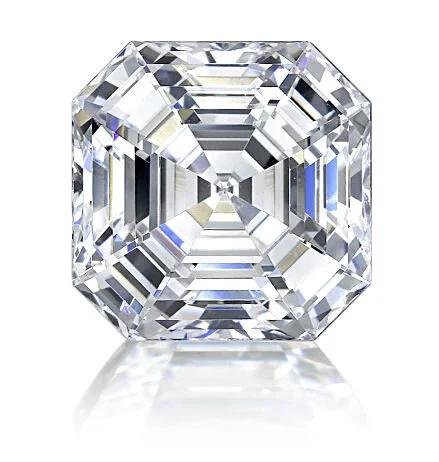
The shape was inspired by the emerald cut but was given a distinct identity of its own. A square contour, cropped corners, and step-cut facets together created an almost octagonal shape.
The result was clear, architectural, and remarkably modern. The focus was not on the maximum number of light flashes; Joseph Asscher sought a perfect balance between light, transparency, and depth.
The original Asscher Cut featured 58 facets. This fact is much more than a technical footnote. It was precisely this facet distribution that determined the characteristic optical effect.
Broad planes of light alternately darken and lighten as the diamond moves. This is often described as a hall-of-mirrors effect. It is a controlled, almost hypnotic brilliance that only arises when the proportions are cut with exceptional precision.
An Amsterdam family and a world-famous diamond
The Asscher name gained international prestige through expertise, discipline, and exceptional commissions. A legendary moment followed in 1908, when Joseph Asscher was commissioned to cleave the Cullinan diamond.
The rough Cullinan weighed 3,106 carats, making it the largest gem-quality rough diamond ever found.
Cleaving such a stone was not an act of strength, but of absolute knowledge. The diamond was studied for a long time to understand its crystal structure and natural cleavage lines. Only then could the precise point for the decisive blow be determined.
The Cullinan was successfully cleaved and then further processed. From the rough stone, nine large and 96 smaller diamonds were created. The most important specimens eventually found a place in the British Crown Jewels.
This event established the worldwide reputation of the Amsterdam family business. At the same time, it demonstrates why diamond processing is never solely about machines or calculations.
Every diamond possesses its own crystal structure, internal tension, and unique possibilities. The right decision therefore requires training, experience, and a keen eye. Only in this way can a cutter recognize what a rough stone can truly become.
This family diamond history also gives the signature of Jan Maarten Asscher its meaning. Not as a decorative past, but as an enduring standard—a standard for selection, proportion, and uncompromising dedication to quality.
For me, the Asscher cut is therefore more than an aesthetic choice. It forms a tangible connection to my family history.
Why the Asscher cut remained timeless
Following its introduction, the Asscher-cut diamond became closely associated with the aesthetics of the 1920s and 1930s. The Art Deco style embraced clean geometry, symmetry, and powerful graphic contrasts.
The octagonal appearance of the Asscher was a natural fit. In platinum settings, the diamond took on a modern yet ceremonial look. It was often flanked by baguette-cut diamonds.
Yet the Asscher has never remained exclusively a vintage choice. The shape is not dependent on a fashionable color or a temporary trend.
Its architectural clarity fits beautifully with contemporary minimalism. At the same time, it comes into its own in richer designs, such as rose gold, white gold, yellow gold, or a sophisticated combination of gold colors.
A round brilliant-cut diamond feels lively and classically romantic. An oval can make the hand appear optically longer. The Asscher, however, makes a different statement.
It looks confident, cultivated, and discreet. This diamond does not draw attention through loudness, but through presence. For those who choose a piece of jewelry as personal expression, that distinction is essential.
Asscher, emerald, and radiant: the difference is in the light
The Asscher-cut diamond is frequently confused with the emerald-cut diamond. Both belong to the so-called step cuts, in which the facets run in steps toward the central table of the diamond.
Nevertheless, both cuts differ clearly in contour and appearance. An emerald cut is typically rectangular and has an elongated silhouette.
The Asscher is more square and possesses more deeply cropped corners. As a result, the stone looks more compact, creating a powerful, almost graphic symmetry.
The original Asscher Cut from 1902 has 58 facets. The later-developed Royal Asscher Cut has 74 facets. These extra facets create a more intense light effect while maintaining the characteristic depth effect.
A radiant cut also has cropped corners. However, this cut is more strongly focused on a lively, fragmented brilliance.
That is precisely where the trade-off lies. Those seeking continuous sparkle may feel more attracted to a radiant or round brilliant. Those who appreciate calm, open planes of light are more likely to choose an Asscher.
Evaluating the quality of an Asscher diamond
With every diamond, cut quality, color, clarity, and carat weight play an important role. With an Asscher, color and clarity take on extra significance.
The large, open facets make inclusions more visible. Any present color tint is also more noticeable than in a brilliant-cut diamond. A carefully selected stone therefore maintains its clarity and elegance even upon close inspection.
Nevertheless, the cut quality remains decisive. A beautiful Asscher requires harmony between the table, crown, pavilion, and facet pattern.
If the diamond is cut too shallow, it can look lifeless. If the proportions are out of balance, the characteristic depth disappears. Symmetry here is not an abstract quality mark; it forms the foundation of the visual tranquility for which this cut is chosen.
The setting also influences the final experience. In platinum or white gold, a colorless Asscher takes on a cool, crisp appearance. Rose gold softens its geometric character and provides a warmer contrast.
A solitaire setting allows the shape to speak for itself. Side stones, such as baguettes or tapered diamonds, actually reinforce the reference to Art Deco.
There is no universally correct combination. The most beautiful choice arises when the diamond, precious metal, and personal style convincingly complement each other.
A diamond with a recognizable personality
The history of the Asscher diamond explains why this cut still possesses so much appeal. It originated in a period when technical innovation and aesthetic discipline went hand in hand.
That origin remains visible in every well-cut stone. You recognize it in the controlled brilliance, the clear structure, and the courage not to rely solely on effect.
An Asscher-cut diamond demands attention and rewards that attention with layers of depth. That is why it suits milestones that should not feel fleeting.
Think of an engagement, a meaningful birthday, or a personal success. As a future heirloom, this diamond also possesses a special power.
Anyone considering an Asscher is best advised not to judge the diamond solely on paper. Observe how the facets react to movement. Note the color against your skin and experience how the shape feels on your hand.
During that personal encounter, the difference becomes clear. You then see not just a beautiful diamond, but a stone with its own enduring character.